Full-stack LLM applications that ship
We build production LLM apps end-to-end — chatbots, in-product copilots, generation studios, and document assistants — with modern UI patterns, model routing, and cost guardrails baked in from day one.
What goes into a real LLM product
A useful AI feature is a full-stack build — orchestration, UI, auth, cost control, and evaluation working together.
Prompt orchestration
Composable prompts, few-shot examples, and structured outputs managed as first-class code, not hidden strings.
Streaming UI patterns
Token-by-token streaming, partial UI rendering, and cancellable requests so responses feel instant, not laggy.
Retrieval hybrid search
BM25 plus vector search, reranking, and citation surfaces so answers stay grounded in your product's data.
Model routing & fallbacks
Route between providers by task difficulty, latency, and cost, with automatic fallback when a provider degrades.
Cost & rate-limit guardrails
Per-user quotas, token budgets, and provider-side rate handling so a runaway feature can't drain the AI bill.
User auth & audit trail
SSO, tenant isolation, and per-request logs — the plumbing that lets an AI feature pass a security review.
From use case to shipped feature
A four-phase build that hits a working prototype fast and doesn't skip the work that makes it production-ready.
Use-case scoping
We narrow the surface area to a specific user, a specific task, and a measurable success signal.
Prototype in a sprint
A functional prototype against real data — enough to test with users and validate the core interaction.
Harden for production
Auth, streaming, rate limits, logging, error states, and the UI polish that makes it feel like part of your product.
Ship + iterate on evals
Roll out behind flags, watch the eval score, and iterate on prompts and models with a real feedback loop.
The application stack we build on
Frontend, backend, and model providers chosen for streaming performance, DX, and cost control.
What teams ask us to build
Concrete LLM-powered features that move a real number in a real product.
In-app AI assistants
A copilot inside your product that knows the current user, the current view, and can take real actions.
Document Q&A tools
Upload, index, and query long-form documents with cited answers and follow-up questions.
Content generation studios
Brand-aware drafting tools for marketing, product, and support content with editable outputs and version history.
Meeting summarization
Transcribe, summarize, and extract action items — with speaker attribution and links back to timestamps.
Interview & feedback synthesis
Turn dozens of research interviews or survey responses into themed insights with evidence trails.
Onboarding chatbots
Guide new users through setup, answer product questions from your docs, and hand off to humans on demand.
Why teams build with us
The difference between a demo and a durable AI feature is in the plumbing.
Ship AI features faster
A reusable foundation for auth, streaming, and evals means each new feature starts from working plumbing.
Predictable model spend
Routing, caching, and quotas keep unit economics understandable and let finance forecast AI costs like any other line.
Better answer quality
Retrieval, structured outputs, and eval-gated releases raise answer quality without a full model swap.
Fewer regressions
Every prompt change runs through the eval set, so a "small tweak" can't silently break an important flow.
A grounded LLM app in production
A retrieval-augmented product built end-to-end from ingestion to UI.
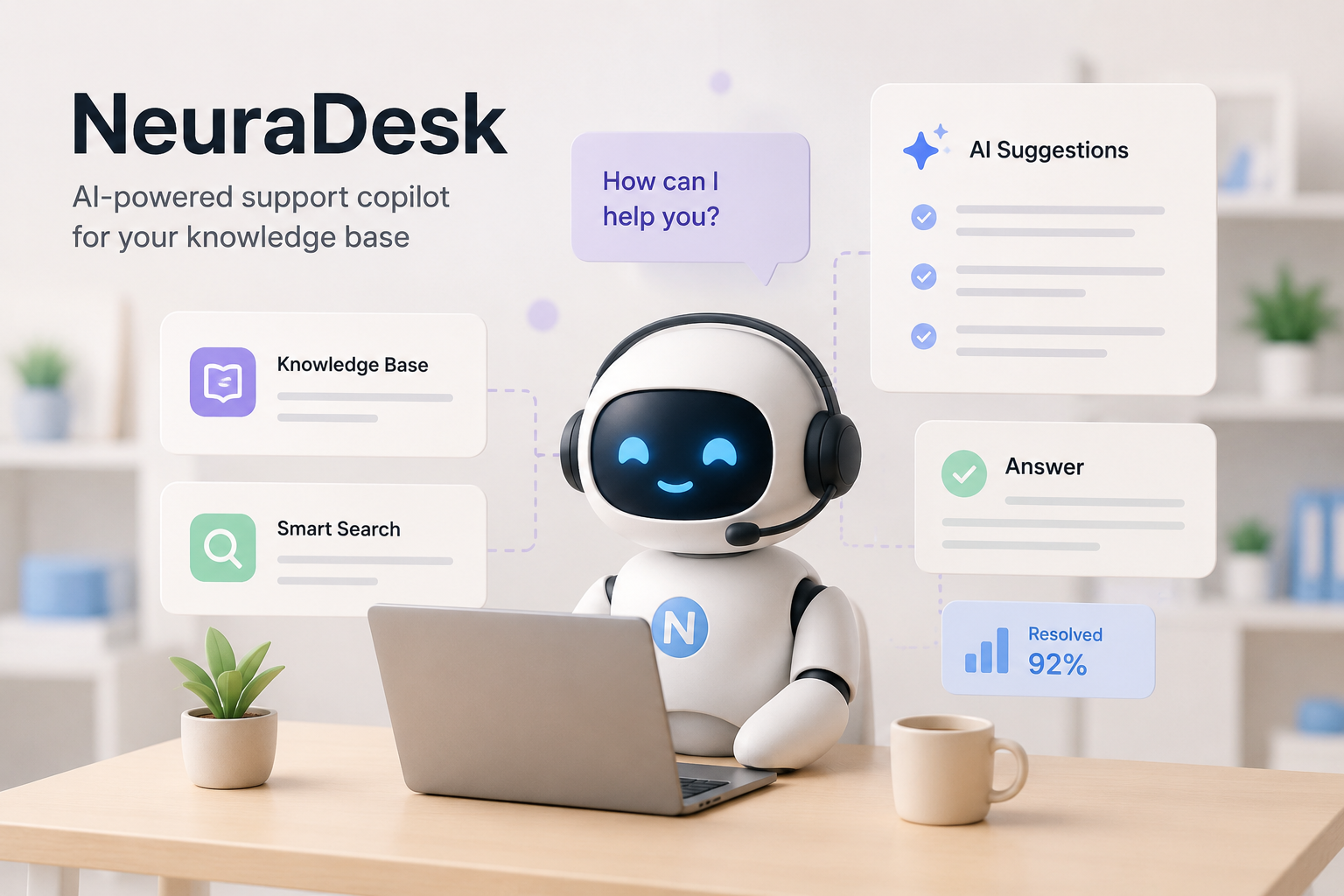 AI • RAG
NeuraDesk
A retrieval-augmented support copilot that grounds answers in a company's own knowledge base.
Read Case Study →Why teams pick us for LLM apps
A senior team that ships full-stack AI features and stays with them past launch.
Learn more about us →Full-stack, not just prompts
One team owns the model layer, the API, the UI, and the operational tooling around them.
Evaluation-driven from day one
We define the score before we write the prompts, so quality is a number you can improve on purpose.
Provider-agnostic by default
Model routing and abstractions mean switching between OpenAI, Anthropic, or an open model is a config change.
Own your stack — no vendor lock-in
Code, infrastructure, and evaluation sets live in your accounts and repos. You keep the keys and the artifacts.
Questions teams ask us first
Practical answers on scope, model choice, and how LLM apps get to production.
How fast can we get a real prototype?
Which model should we use?
Do you use streaming or batch?
How do you control model cost?
How do you evaluate quality?
Can it run on-prem or in our VPC?
Ready to ship an LLM feature users trust?
Tell us the workflow you want to change. We'll come back with a scope, a stack, and a realistic timeline.
Book a Discovery Session →