APIs and microservices built for teams that ship
REST, GraphQL, and event-driven services designed contract-first, gated by CI, and instrumented for the incidents that will inevitably happen at 3am.
What API and microservice engineering means
Well-designed services stay decoupled, versioned, and observable — so teams can move independently without breaking each other.
REST & GraphQL APIs
Well-versioned APIs with OpenAPI or GraphQL schemas, generated clients, and stable contracts consumers can plan around.
Event-driven services
Kafka, RabbitMQ, and cloud pub/sub patterns with schema registries, idempotent consumers, and replayable topics.
API gateway & auth
Gateway patterns with Kong, Istio, or cloud-native equivalents, wired to OAuth, JWT, and mTLS where they belong.
Contract-first design
Schemas drive code, mocks, and tests, so producers and consumers stay in sync across teams and languages.
Rate limiting & quotas
Per-tenant quotas, backoff policies, and budgets that protect the platform from noisy neighbors and runaway clients.
Full observability
Distributed tracing, structured logs, and RED metrics so on-call knows what is happening before customers do.
A path from domain sketch to service platform
Four phases that put contracts, tests, and observability on the critical path.
Contract & domain modeling
We map bounded contexts, ownership, and data flows, then draft schemas that define the surface each service exposes.
Service design
Choose synchronous versus event-driven per interaction, define SLOs, and shape the deployment topology.
Build with contract tests
Services delivered with unit, integration, and contract tests enforced in CI so producers cannot break consumers silently.
Deploy & monitor
Progressive delivery, dashboards, and alerting tied to SLOs, plus runbooks that give on-call something to actually follow.
The service stack we build on
Languages, messaging, gateways, and orchestrators chosen for durability, throughput, and operational sanity.
Where services earn their overhead
Systems where team boundaries, throughput demands, or external integrations make a service architecture pay off.
Public API platforms
Documented, versioned APIs your customers build on, with SDKs, quotas, and change management.
B2B integrations
Reliable connectors to partner systems with retries, dead-letter handling, and clear audit trails.
Payment/billing services
Idempotent payment and billing services with strong consistency guarantees and reconciliation.
Event-driven ingestion
High-throughput ingest pipelines that decouple producers from downstream processing.
Legacy modernization
Strangler-fig migrations that peel functionality off monoliths without a big-bang rewrite.
Multi-tenant SaaS backends
Tenant isolation, per-tenant limits, and observability designed for real SaaS operations.
Outcomes engineering leaders track
The point is not services for their own sake — it is teams shipping independently without breaking each other.
Loosely coupled systems
Clear contracts and event topics let teams change internals without coordinating a release with every downstream consumer.
Faster team velocity
Independent deploys, small blast radius, and less cross-team coordination mean lead times go down.
Predictable scaling
Services scale independently based on their own bottlenecks, not the whole app together.
Better incident response
SLOs, tracing, and runbooks turn 3am pages into ten-minute fixes instead of multi-hour outages.
Service-backed AI in production
A grounded support copilot with the retrieval and evaluation services behind it.
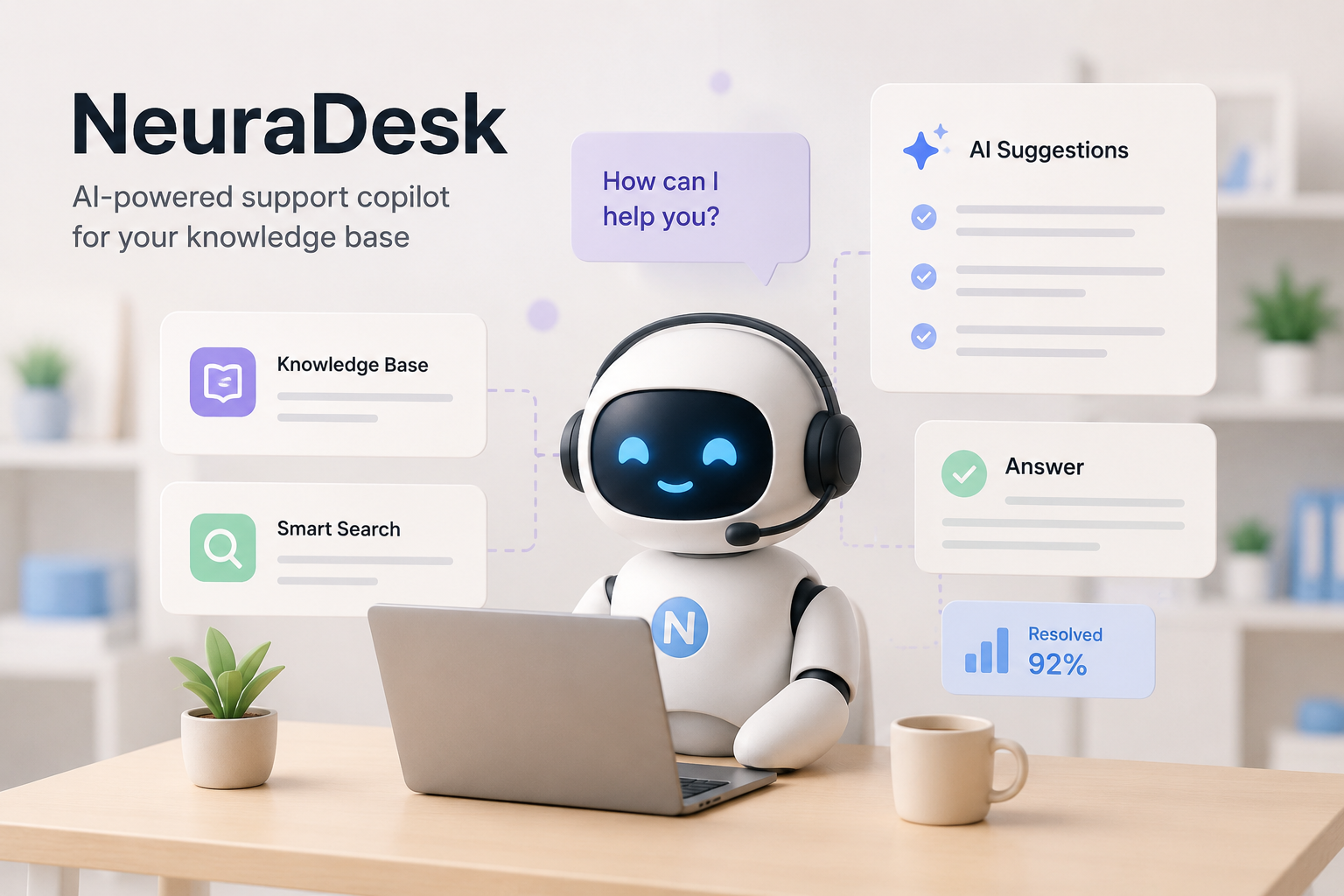 AI • RAG
NeuraDesk
A retrieval-augmented support copilot that grounds answers in a company's own knowledge base.
Read Case Study →Why teams choose us for API and service work
A senior team that has run services in production and knows what breaks at scale.
Learn more about us →Senior backend engineers
People who have carried pagers for large systems designing the ones you plan to run.
Contracts before code
Schema and API design come first so services and consumers stay compatible as they evolve.
Own the outcome, not just the endpoints
Delivery includes observability, SLOs, and runbooks — not a repo and a walkaway.
Own your stack
Services, pipelines, and infrastructure live in your accounts and repositories. No hostage handovers.
Questions engineering leaders ask us
Practical answers on service design, migration paths, and how service platforms actually reach production.
Do we need microservices at all?
REST or GraphQL?
How do you handle breaking changes?
How do you deal with events and consistency?
How do you handle observability?
Can you help migrate off a monolith?
Ready to design your API and service platform?
Book a working session and we'll map the first services around real team boundaries and workloads.
Book a Discovery Session →